How to Choose a Dietary Supplement OEM/ODM Supplier: 7 Key Factors for Health Brands
September 28, 2026Industry News
Choosing the right supplier is an important step for any brand developing dietary supplement products.
A reliable supplier may provide much more than manufacturing. Depending on the cooperation model, a supplier may also support formulation development, raw material sourcing, packaging, quality testing, documentation and international logistics.
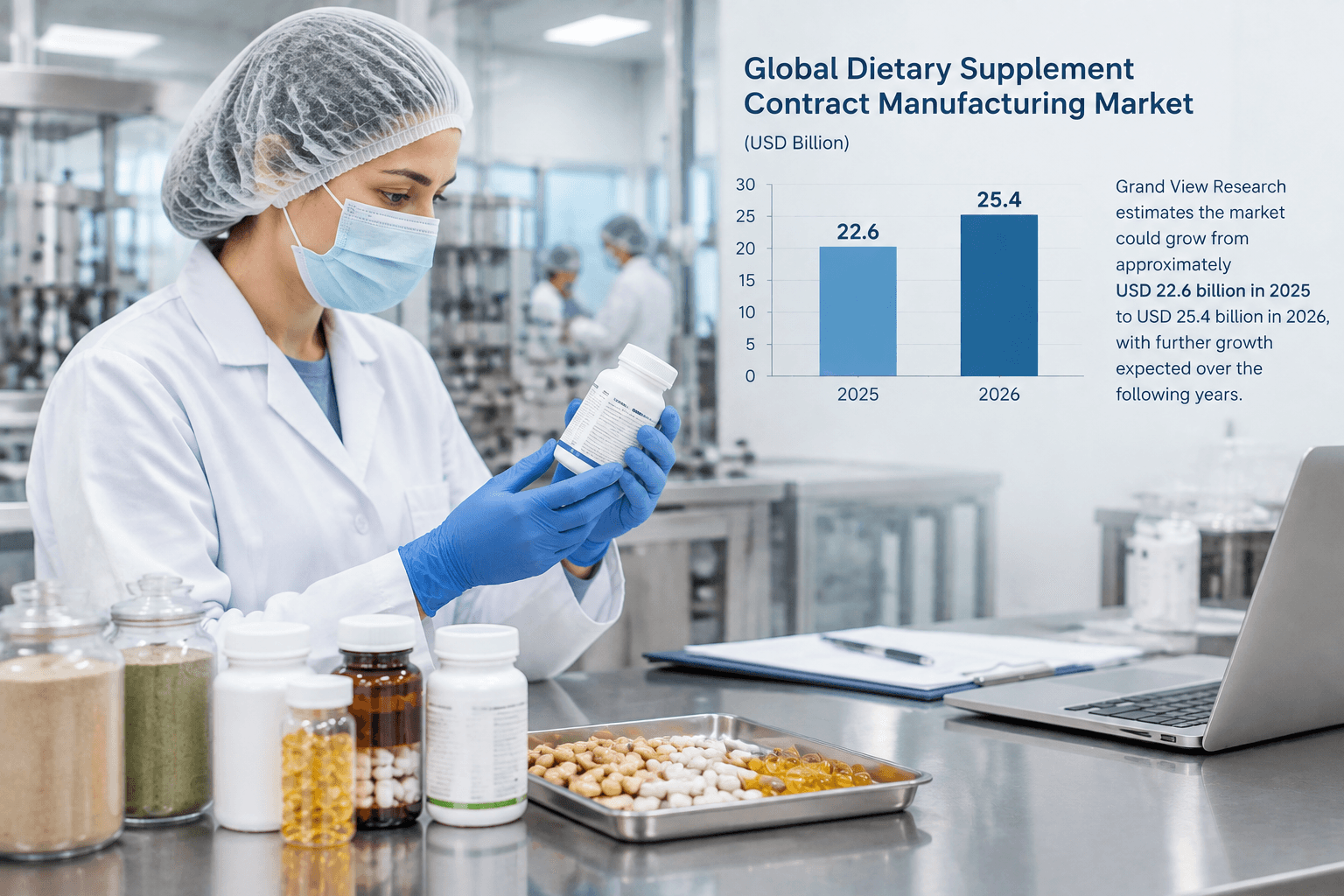
The global dietary supplement contract manufacturing market is expanding. Grand View Research estimates that the market could grow from approximately USD 22.6 billion in 2025 to USD 25.4 billion in 2026, with further growth expected over the following years.
For brands looking for powder, gummy or capsule suppliers, what should they consider before choosing an OEM/ODM partner?
1. Does the Supplier Offer the Product Formats You Need?
The first step is to confirm whether the supplier can provide the product formats required by your business.
Common categories include:
Powder Supplements
Gummy Supplements
Hard Capsules
Softgel Capsules
Vitamin & Mineral Products
Herbal Supplements
Probiotic Products
Collagen Products
Working with a supplier that supports multiple formats can give brands greater flexibility when developing a product portfolio.
For example, the same core nutritional concept may be developed as a powder, gummy or capsule product depending on the target consumer and sales channel.

2. Does the Supplier Support OEM/ODM?
OEM and ODM are common cooperation models in the international supplement industry.
OEM generally focuses on manufacturing according to the customer’s brand, specifications or formula.
ODM can involve a deeper level of product development, including formulation, product specifications and manufacturing solutions.
For small and medium-sized brands without an internal R&D team, ODM support can simplify the product-development process.
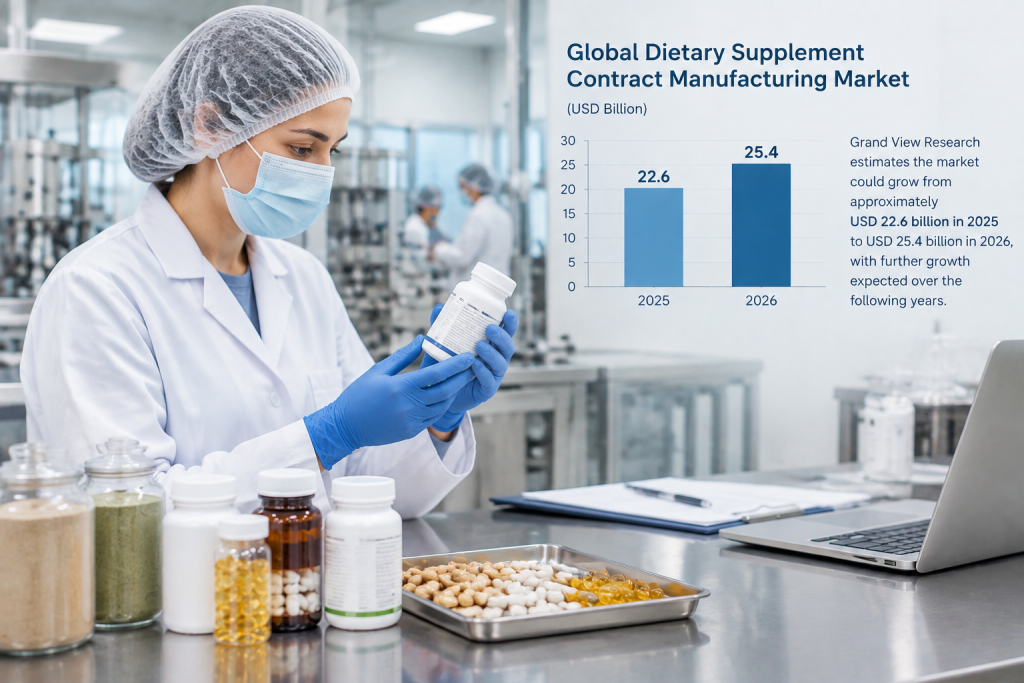
A typical ODM project may include:
Market requirements → Product positioning → Formula development → Sampling → Packaging → Manufacturing → Testing → Delivery
Therefore, brands should ask what services a supplier can actually provide instead of comparing product prices alone.
3. Raw Material and Quality Control
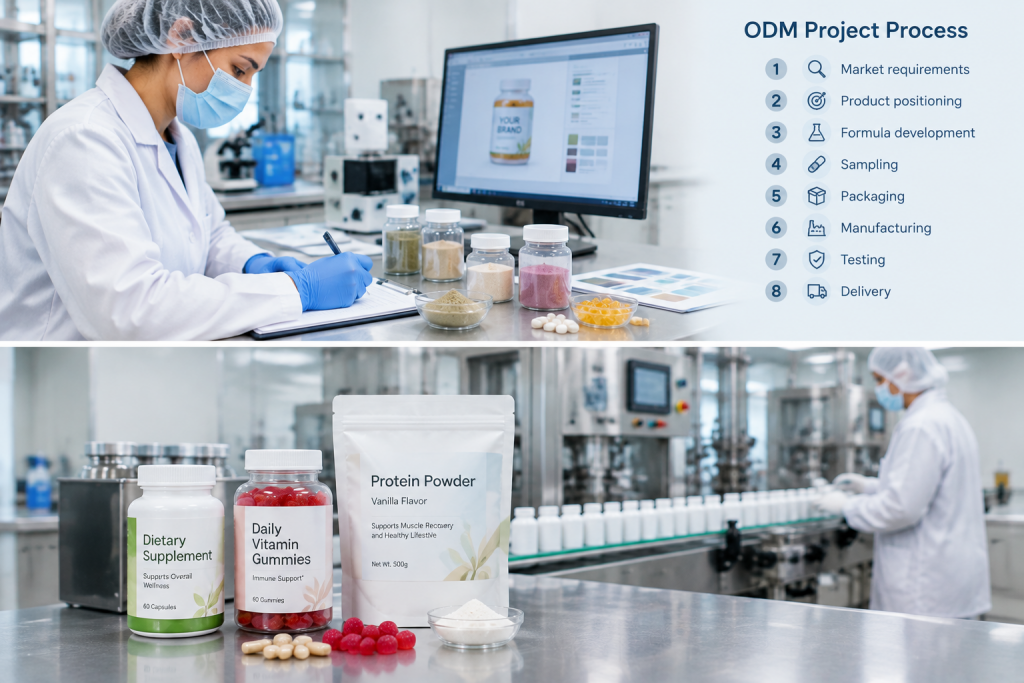
Raw materials are an important part of supplement quality management.
Before cooperation, brands can ask suppliers about their raw material sourcing and testing procedures.
For example:
Supplier qualification
Raw material identification
Microbial testing
Heavy metal testing
Active ingredient testing
Batch traceability
Finished-product testing
The FDA has established specific CGMP requirements for dietary supplement manufacturers, including requirements related to manufacturing and process controls.
For international brands, understanding the supplier’s quality system and available product documentation can also help with market-specific compliance preparation.

4. Can the Supplier Provide Product Documentation?
International supplement sourcing involves more than purchasing finished products.
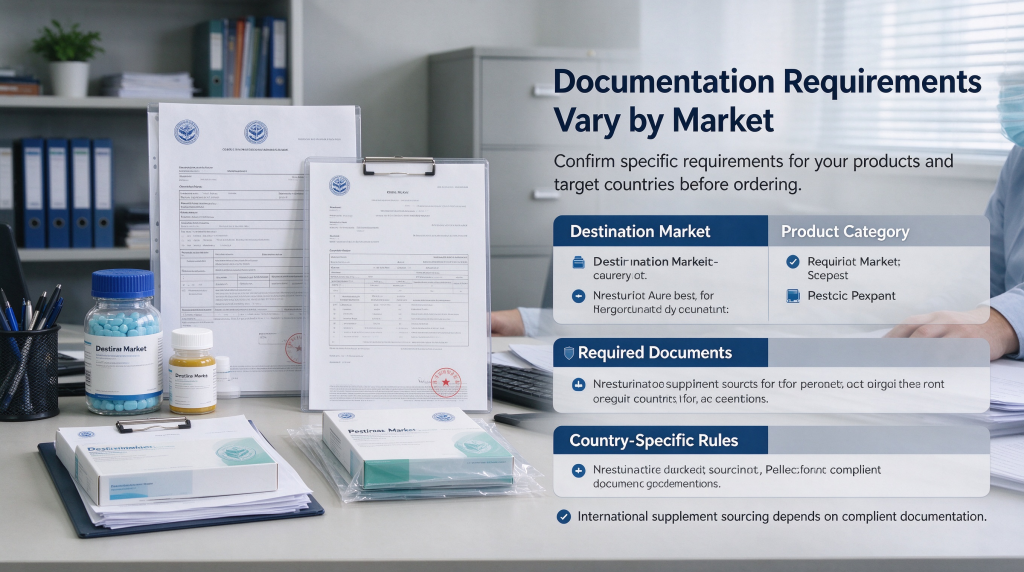
Depending on the destination market and product category, brands may need different types of product documentation.
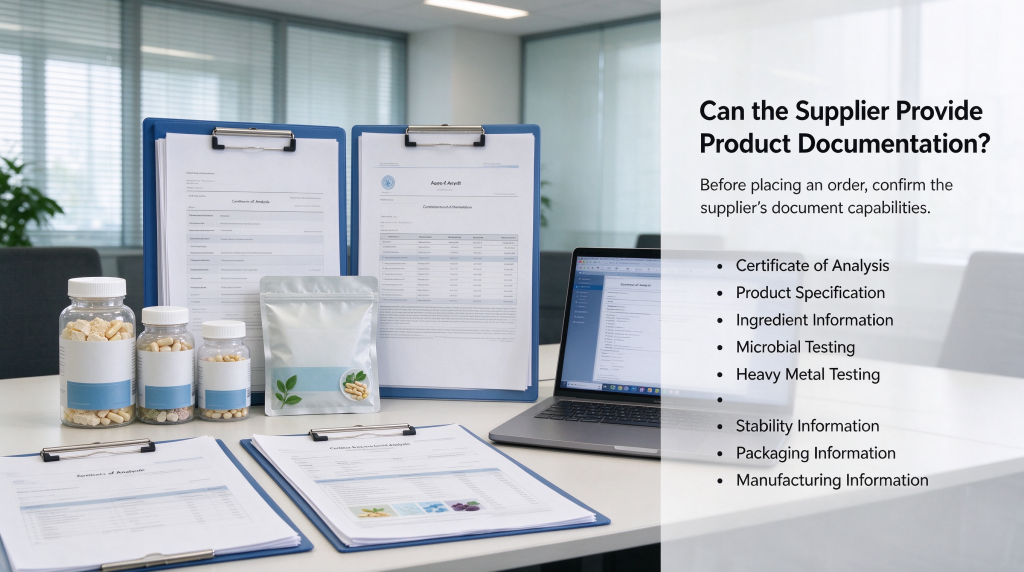
Before placing an order, brands can ask whether the supplier can provide documents such as:
Certificate of Analysis
Product Specification
Ingredient Information
Microbial Testing
Heavy Metal Testing
Stability Information
Packaging Information
Manufacturing Information
Documentation requirements vary between markets, so brands should confirm the specific requirements for their products and target countries.
5. Does the Supplier Support Small-Batch Orders?
Small-batch production can be particularly important for new brands.
When entering a new market, many companies prefer to test products before purchasing large quantities.
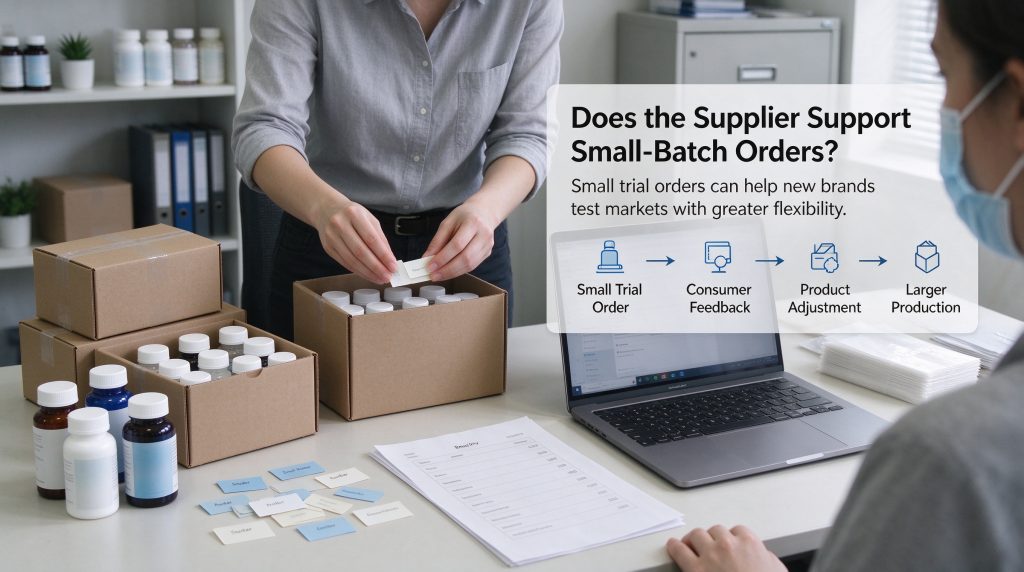
A possible development process is:
Small trial order → Market testing → Consumer feedback → Product adjustment → Larger production
This approach can give brands greater flexibility during the early stages of product development.
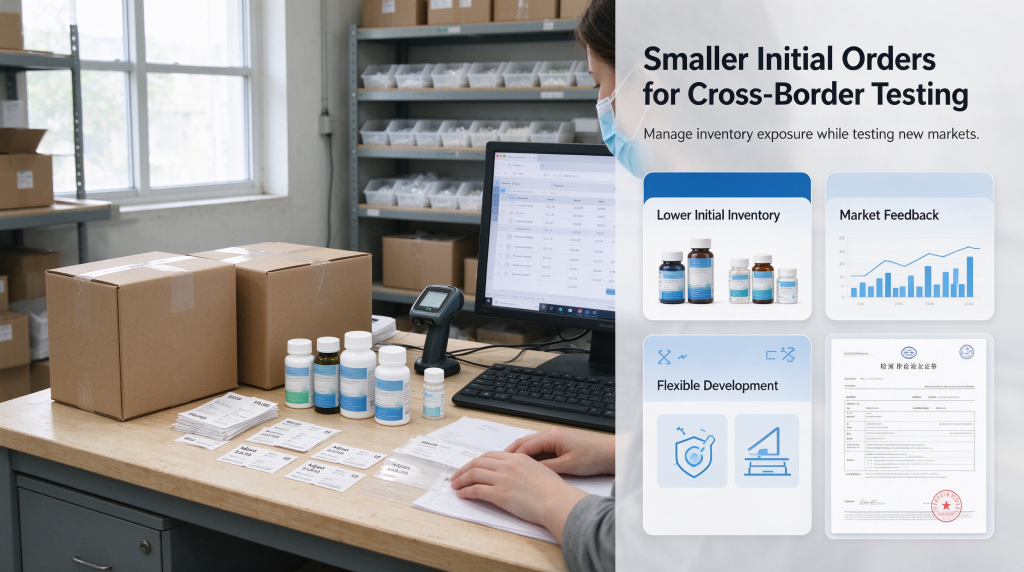
For cross-border e-commerce businesses, smaller initial orders can also help manage inventory exposure when testing a new market.
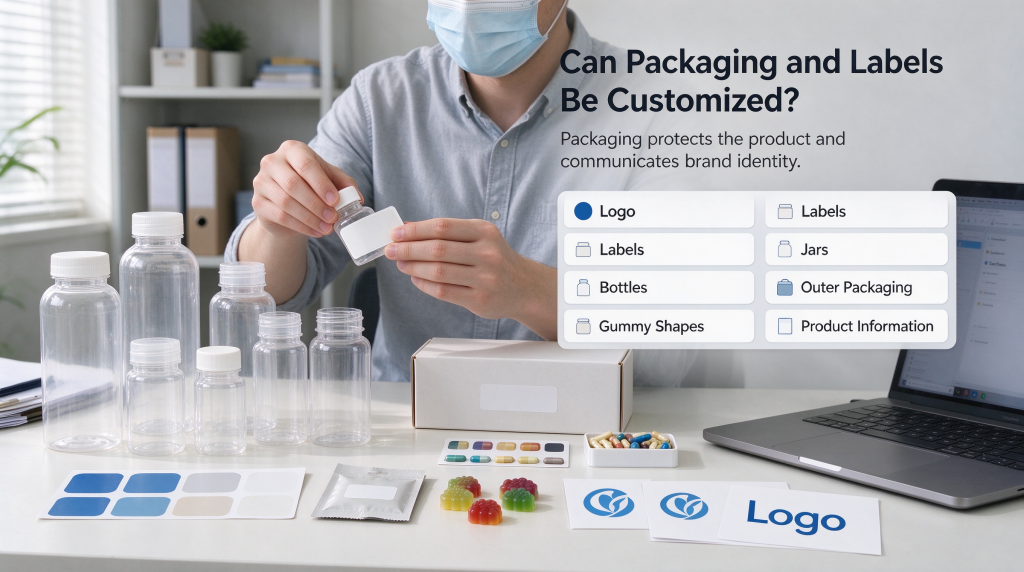
6. Can Packaging and Labels Be Customized?
Packaging protects the product while also communicating the brand identity.
When an OEM/ODM supplier provides packaging support, brands can potentially move from a product concept to a finished branded product more efficiently.
Customization may include:
Logo
Labels
Bottles
Jars
Sachets
Gummy shapes
Capsule colors
Outer packaging
Product information
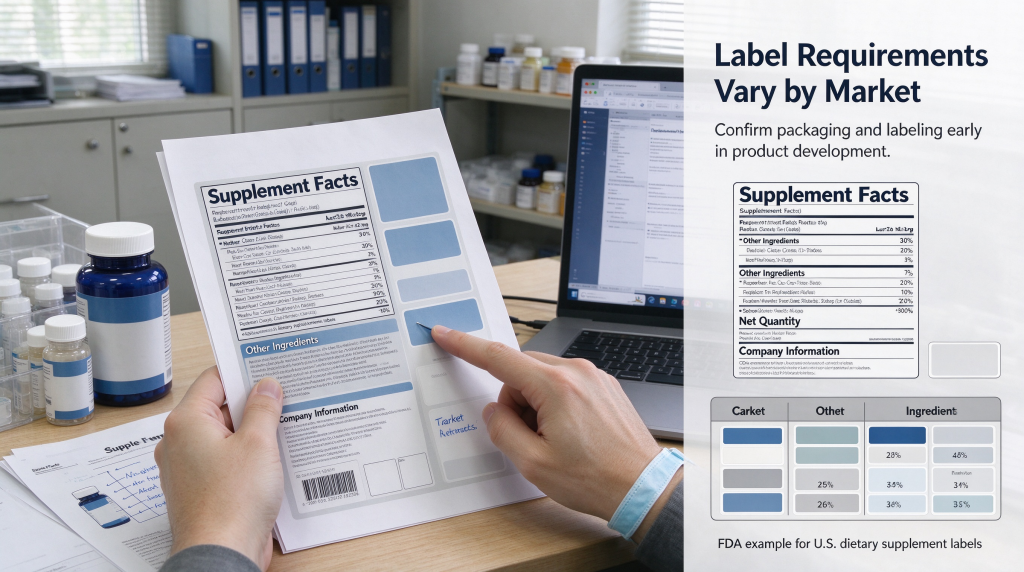
However, supplement labeling requirements vary by market.
For example, the FDA requires U.S. dietary supplement labels to include information such as Supplement Facts, other ingredients, net quantity and relevant company information.
For this reason, packaging and labeling should be considered early in the product-development process.
7. Can the Supplier Support Long-Term Cooperation?
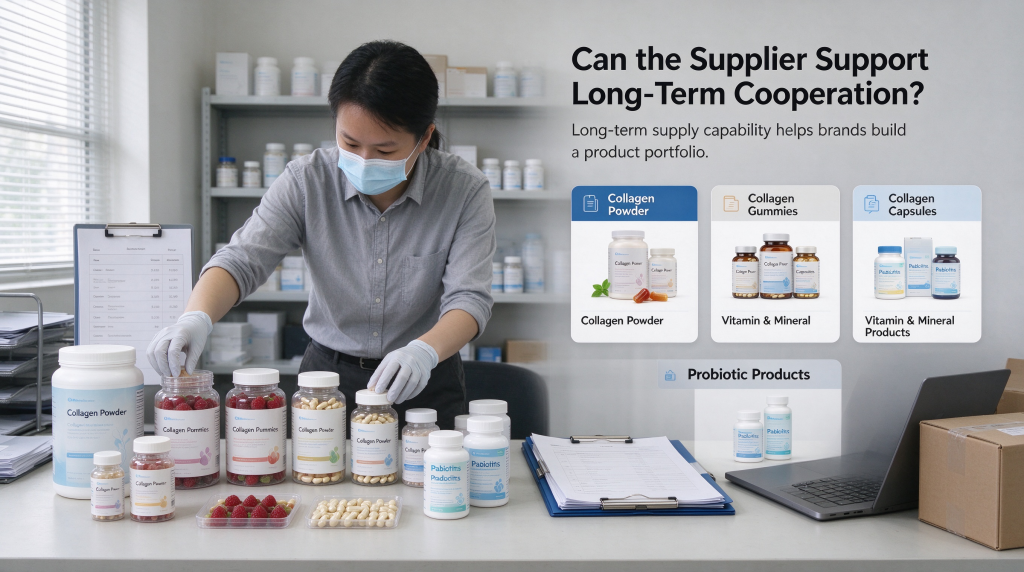
The final factor is long-term supply capability.
A health brand rarely develops only one product. Over time, it may build an entire product portfolio.
For example:
Collagen Powder
Collagen Gummies
Collagen Capsules
Vitamin & Mineral Products
Probiotic Products
If a supplier can support multiple product formats, brands may have an easier time expanding their product portfolio without repeatedly searching for new manufacturing partners.
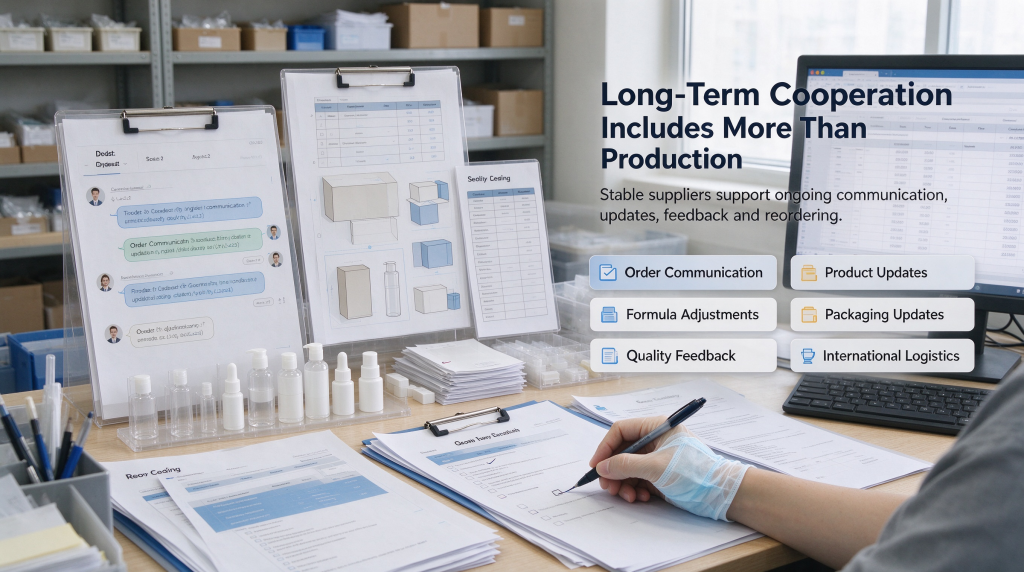
Long-term cooperation may also involve:
Order communication
Product updates
Formula adjustments
Packaging updates
Quality feedback
Reordering
International logistics
For this reason, a transparent supplier with stable production capabilities and international trade experience can become an important part of a brand’s long-term supply chain.
Conclusion: Choosing a Supplier Is More Than Comparing Prices
For health brands, supplier selection should not be based on price alone.
Product quality, formulation capabilities, OEM/ODM services, MOQ, packaging customization, documentation, production capacity and export experience can all influence the success of a product-development project.
For small and medium-sized brands, working with a supplier that supports powders, gummies and capsules, together with OEM/ODM and small-batch purchasing, can provide greater flexibility when developing new products.
Before starting a project, brands should clearly define their target market, product format, formulation requirements, MOQ, packaging requirements and documentation needs, and then discuss these details with potential suppliers.