Raw Material Safety
July 23, 2026Product News
Preventing Adulteration from the Start
Adulteration remains one of the greatest risks in the dietary supplement industry. According to USP experts, supply chain disruptions, high ingredient costs, and nonspecific testing methods all increase the likelihood of adulteration. Adulterated or misbranded supplements can pose serious health risks—one U.S. study estimates that each year, 23,000 emergency department visits and 2,000 hospitalizations are attributed to adverse events related to dietary supplements.
The Risk Landscape
Common adulteration issues include:
Species substitution: Plant species with similar appearances but different chemical profiles may be unintentionally or intentionally substituted. For example, certain seeds closely resemble sour jujube seed but lack its characteristic marker compounds.
Undeclared drug substances: Some products marketed as dietary supplements contain undeclared pharmaceutical ingredients, such as sibutramine (a withdrawn weight-loss drug) or DMAA (a compound linked to cardiovascular risks).
Raw Material Storage and Identity Verification
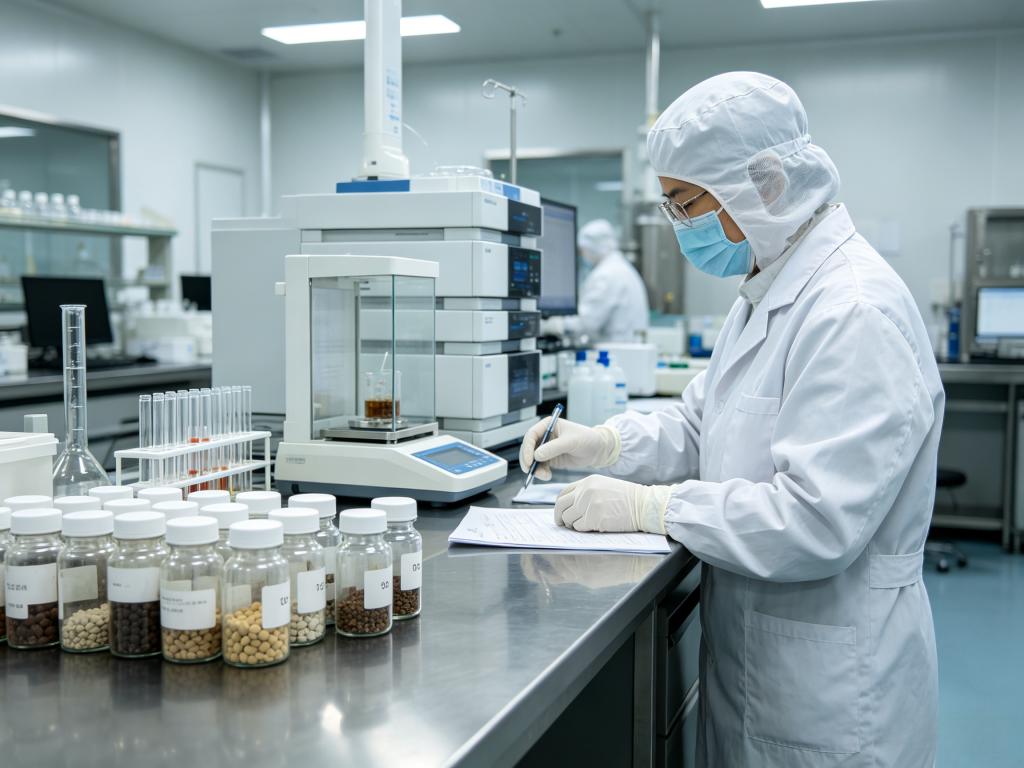
Impurities and contaminants: Heavy metals, pesticide residues, and residual solvents can compromise product safety.
Our Safety Protocol
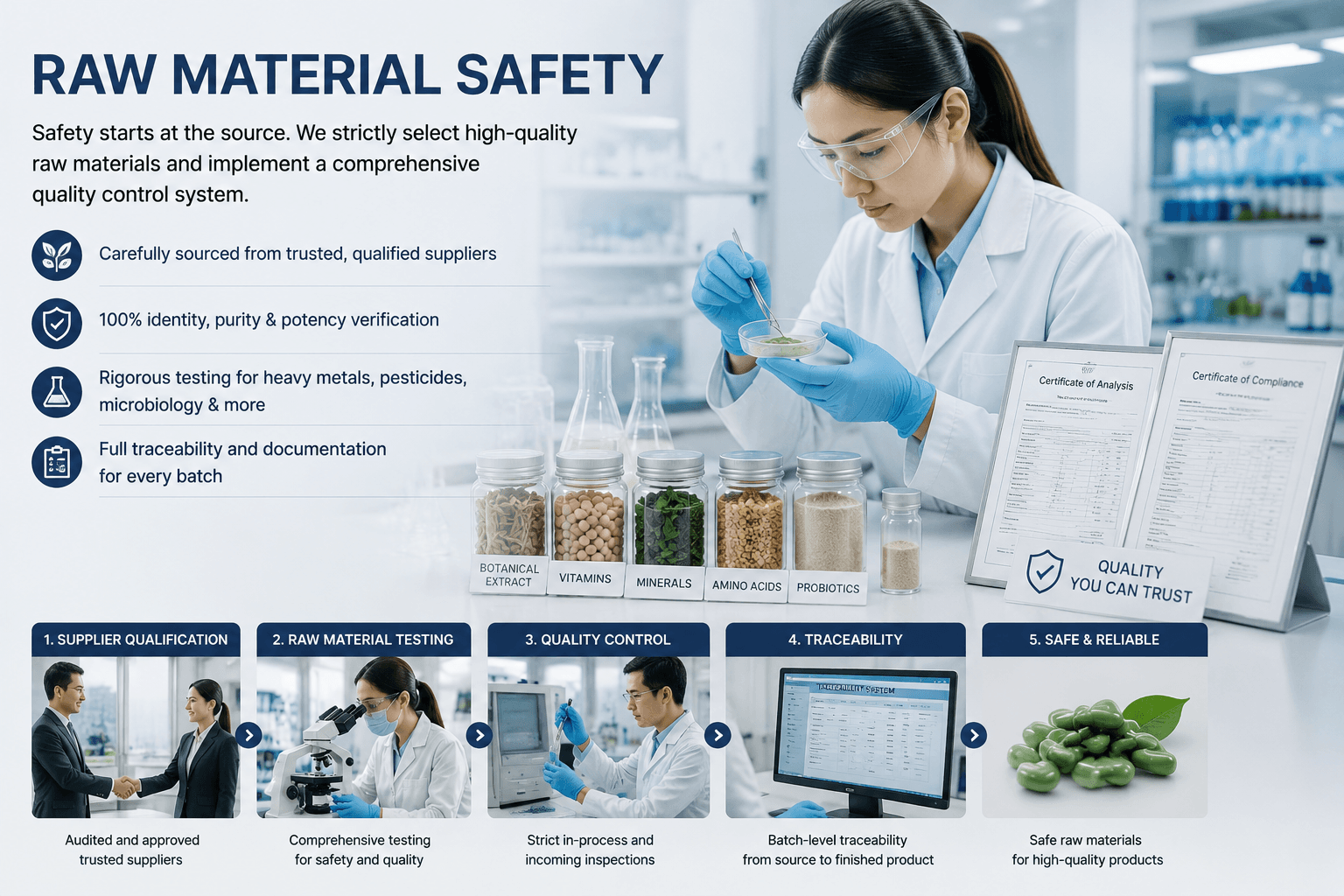
Supplier Qualification: All raw material suppliers must pass a rigorous qualification process, including facility audits and quality agreements. As USP guidelines recommend, we evaluate suppliers at least annually, with higher frequency for critical materials.
Identity Testing on Every Lot: Under cGMP requirements, identity testing must be performed on every incoming lot of dietary ingredients. We use validated analytical methods—including HPLC, GC, and HPTLC—to confirm that each ingredient matches its declared identity and contains the characteristic marker compounds expected for that species.
Product testing

Comprehensive Contaminant Screening: Our testing programs screen for:
Heavy metals (lead, mercury, cadmium, arsenic)
Pesticide and herbicide residues
Residual solvents
Microbial contamination
Adulteration Monitoring: We stay informed about known adulteration risks in the marketplace and adjust our specifications accordingly. If a material is known to be at risk for adulteration, we implement additional specifications and tests beyond compendial requirements.
Third-Party Verification: In addition to our in-house testing, we utilize third-party laboratories accredited to ISO-17025 standards to provide independent verification of safety and purity.
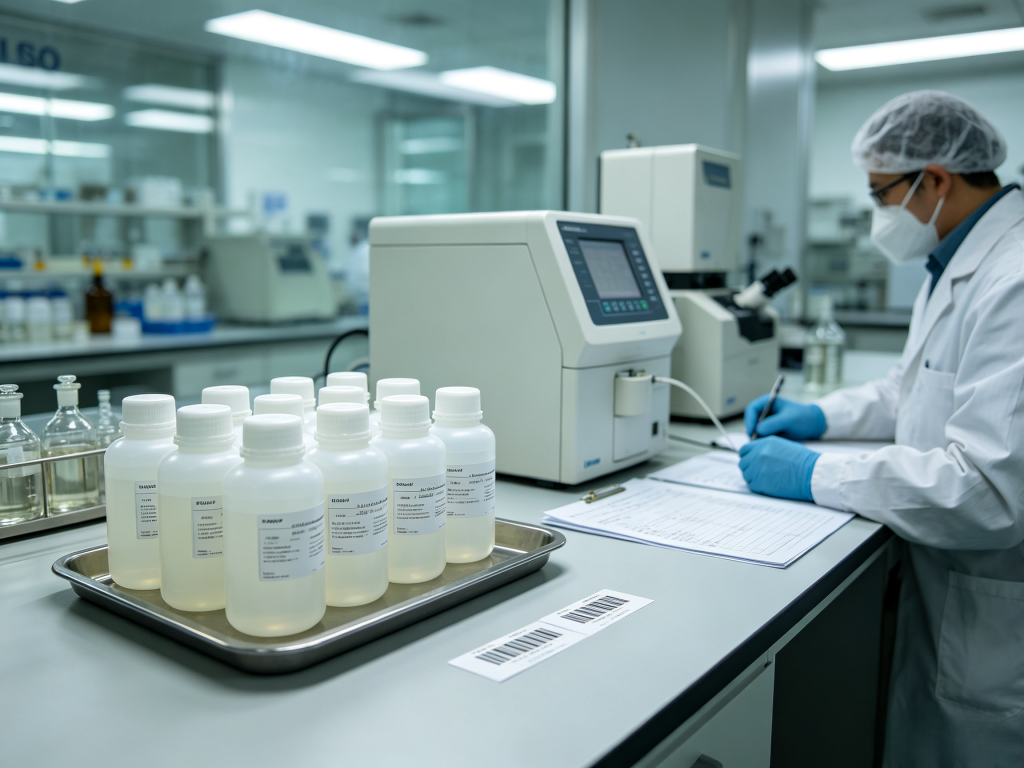
Pollutant Screening Laboratory Testing